
Copper Polishing & Deburring Guide
Copper's softness and reactivity create unique finishing challenges. Here's how to achieve burr-free, mirror-smooth results across electronics, plumbing, and decorative applications.
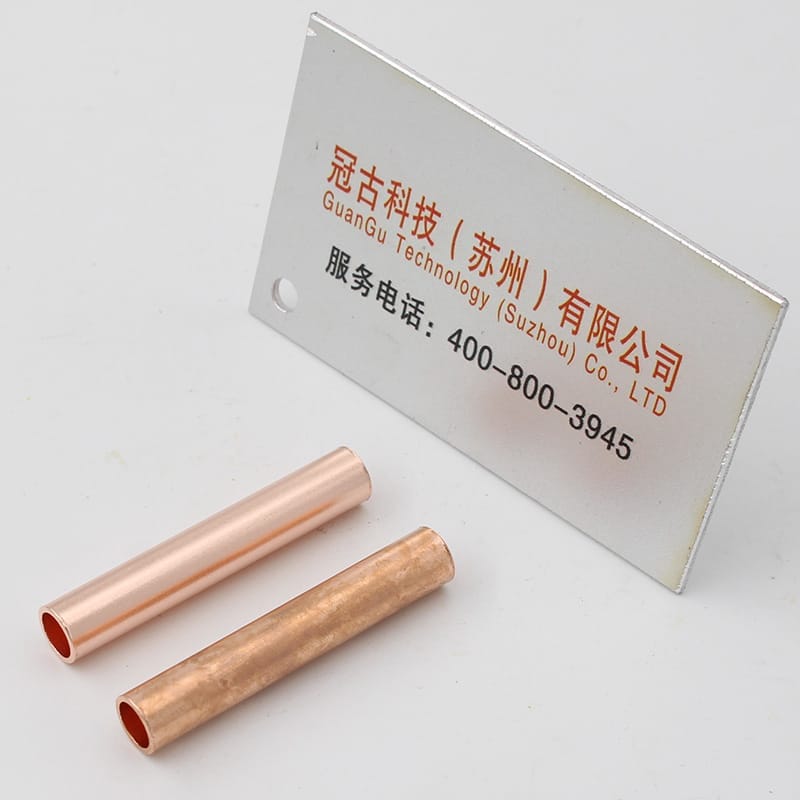
Copper conducts heat and electricity better than almost any metal. It bends easily and resists corrosion. But it is also soft (Mohs hardness ~3) and oxidises fast. These traits make surface finishing tricky.
Why Copper Needs Care — Burrs on copper connectors cause short circuits. Rough surfaces add friction and cut conductivity. The oxide layer that forms on fresh copper hurts both looks and performance.
Mechanical Polishing — Start with coarse silicon carbide. Finish with diamond paste. You can reach Ra values as low as 0.01 μm. For complex shapes like heat exchanger fins, CNC machines provide the precision needed at scale.
Chemical and Electropolishing — Acid baths (phosphoric-nitric) work well on tricky shapes that tools cannot reach. Electropolishing removes 1–20 μm of material for ultra-smooth surfaces. This is critical for medical implants and vacuum systems.
Magnetic Polishing for Copper — Copper dents easily under pressure. Magnetic polishing avoids this problem. The pins float in the field — no rigid contact. This makes it ideal for precision connectors, electronic parts, and decorative hardware.
Deburring Tips — Remove burrs without creating new ones from over-processing. Vision systems can map burr locations for targeted treatment. After deburring, apply benzotriazole to stop re-oxidation.
Standards — ASTM B281 covers copper tube finishing. IPC standards apply to electronics. FDA rules cover food-contact copper. Modern polishing technology meets all of these consistently.
Need Expert Advice on Metal Finishing?
Our team can recommend the right polishing solution for your specific application.
Get a Free Consultation