
How Magnetic Polishing Machines Work
A clear, technical overview of the electromagnetic principles, grinding mechanics, and engineering innovations that make magnetic polishing machines uniquely effective.
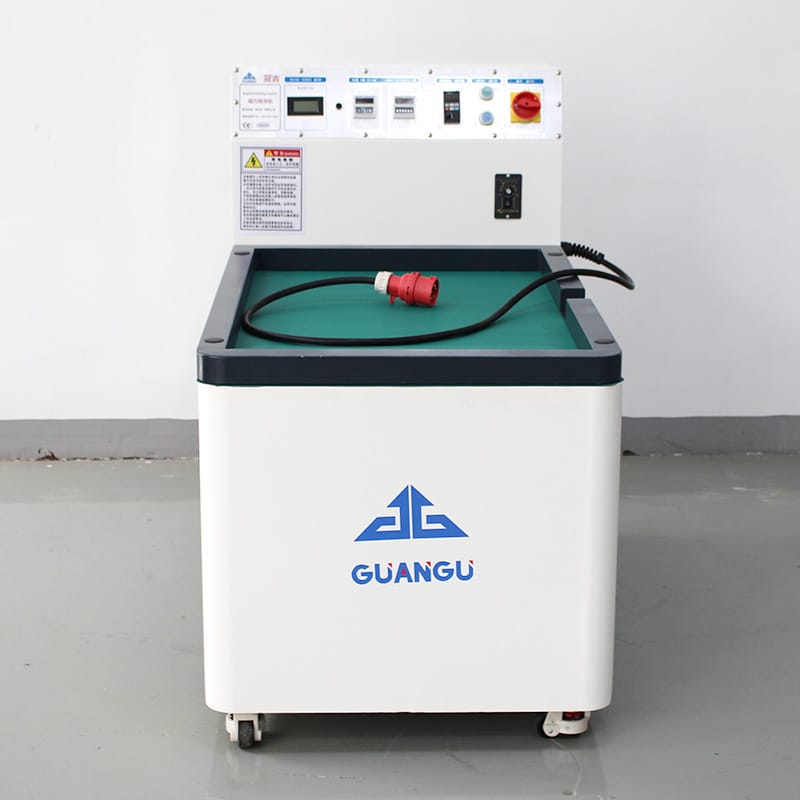
Magnetic polishing is a different way to finish metal surfaces. Instead of pressing an abrasive tool against the part, it uses electromagnetic energy. The result is a gentle, self-adjusting finishing action.
The Basic Idea — Strong magnets sit under the polishing bucket. They create a fast-switching magnetic field. This field launches thousands of tiny steel pins (0.3–1.5 mm wide) into rapid motion. The pins form a dense, swirling cloud of abrasive media.
3D Contact — The pins tumble and spin inside the field. They touch every exposed surface — outside faces, inner holes, threads, grooves, and blind spots. This all-direction action is what makes magnetic polishing special. Tools and belts can only reach surfaces they physically contact.
No Pressure, No Damage — The pins float in the magnetic field. There is no rigid push against the part. So there is no risk of bending, shrinking, or scratching. Even thin walls and tight tolerances stay safe.
The Result — One automated cycle deburrs, removes oxide, polishes, and cleans. Surface roughness can reach Ra 0.05 μm. Cycle times are measured in minutes, not hours. Dimensions stay within ±0.01 mm.
Need Expert Advice on Metal Finishing?
Our team can recommend the right polishing solution for your specific application.
Get a Free Consultation