
Magnetic Polishing: The Metal Washing Machine
An accessible breakdown of how magnetic polishing works, why it outperforms traditional methods, and which industries benefit most from the technology.
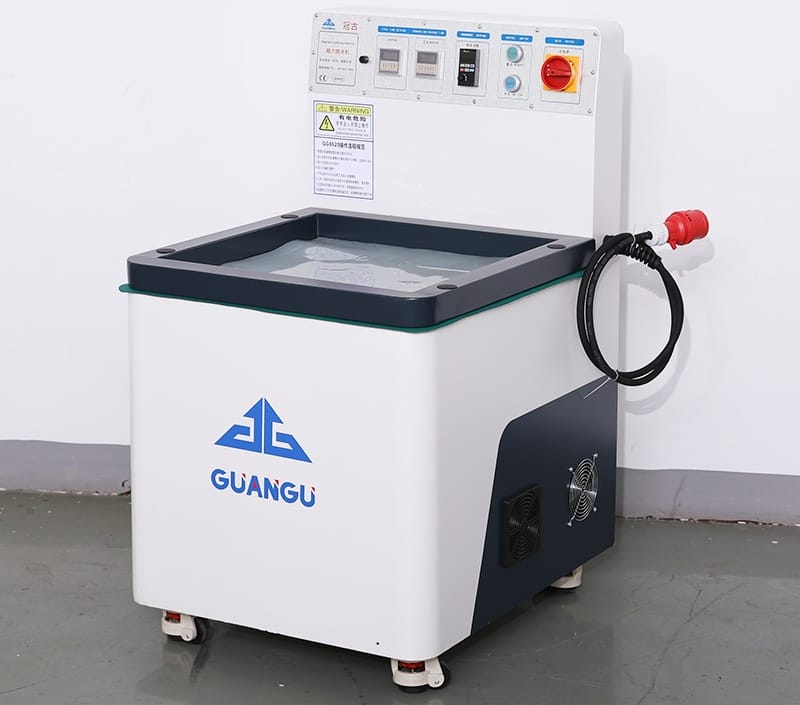
Imagine three workers spending a full shift hand-polishing surgical forceps. Fifty pieces a day. Tired hands. Uneven results. This was normal for many workshops until magnetic polishing came along.
The best way to explain it is simple: a magnetic polisher works like a washing machine for metal parts. Load the parts, add the media (steel pins instead of detergent), set the timer, and press start. The machine handles the rest.
How It Works — A strong spinning magnetic field sits under the polishing bucket. It drives thousands of tiny steel pins in rapid motion. The pins gently rub every surface they touch. This includes inner holes, blind spots, and undercuts that hands cannot reach.
Problems It Solves — Hand polishing is slow, tiring, and inconsistent. Vibratory finishing is faster but needs constant adjustments. Magnetic polishing is fully automatic. No mid-cycle changes are needed. Results stay the same across hundreds of parts per batch.
Best Uses — Medical instruments, watch parts, precision gears, electronic connectors, and jewellery findings. It works on any metal — gold, silver, stainless steel, titanium, brass, copper, and aluminum.
The Bottom Line — One person can run four machines at once. Processing drops from hours to minutes. Quality complaints fall by up to 90%. It is not just an upgrade. It is a new way to finish metal surfaces.
Need Expert Advice on Metal Finishing?
Our team can recommend the right polishing solution for your specific application.
Get a Free Consultation