Magnetic Polishing vs Vibratory Finishing
A detailed head-to-head comparison of magnetic polishing and vibratory finishing — covering cycle times, surface quality, cost, and ideal use cases to help you choose the best mass finishing method.
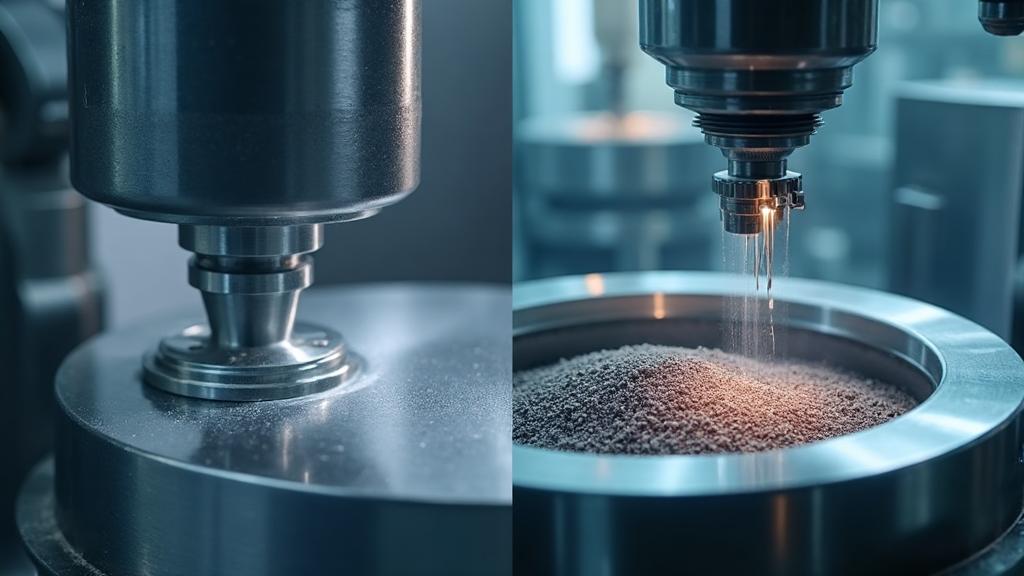
Picking the right finishing method affects your whole production. Magnetic polishing and vibratory finishing both work, but they are very different. This guide covers every factor that matters.
## How Each Method Works
Magnetic Polishing spins a magnetic field to drive thousands of steel pins against your parts. The pins follow every shape — inner holes, threads, blind spots, and undercuts. No mechanical pressure touches the part.
Vibratory Finishing puts parts and loose media (ceramic, plastic, or organic) into a vibrating bowl. The vibration makes the media tumble against the parts. Friction slowly wears down burrs and roughness. This method has been used for decades.
## Side-by-Side Comparison
Speed — Magnetic polishing finishes most jobs in 5–15 minutes. Vibratory finishing takes 30–120 minutes. In a busy shop, this gap means a lot more output.
Finish Quality — Magnetic polishing reaches Ra 0.1–0.2 μm. Mirror finishes (Ra 0.05 μm) are possible. Vibratory finishing gives Ra 0.4–0.8 μm. That is fine for many jobs but not enough for medical, optical, or decorative work.
Complex Shapes — Magnetic polishing wins here. The pins reach inner passages as small as 0.5 mm, threads, and curved surfaces. Vibratory media can only treat surfaces it physically touches. Inner features stay unfinished.
Delicate Parts — Magnetic pins float in the field. No rigid pressure. Dimensions stay within ±0.01 mm. Vibratory media bumps parts against each other. This can chip edges, bend thin walls, and harm fragile pieces.
Noise and Waste — Magnetic polishers run quietly with little dust. Vibratory bowls are loud (hearing protection is often needed) and create slurry waste.
Running Costs — Steel pins last 50+ hours. Per-cycle cost is very low. Vibratory media wears down steadily and must be replaced. This adds up over time.
Batch Size — Vibratory bowls hold more — up to several hundred kilograms. Magnetic machines range from 8 KG (GG8520) to 80 KG (GG2980). For very big or heavy parts, vibratory may be better.
## Choose Magnetic Polishing For
Jewelry and precious metals. Medical devices. CNC-machined parts. 3D-printed metal parts. Electronic connectors. Inner hole and thread finishing. Any job where accuracy and surface quality are critical.
## Choose Vibratory Finishing For
Large-batch rough deburring of castings. Heavy stamped parts with loose tolerances. Edge rounding on non-precision parts. Jobs where batch size matters more than media cost.
## Total Cost
Magnetic machines cost more upfront. But over 1–2 years, total cost is often lower. Faster cycles mean more output. Reusable pins cut consumable spend. One person runs 4+ machines. Energy use per part is lower. Waste disposal costs drop. For shops doing 500+ parts a day, the machine often pays for itself in 6–12 months.
## Common Questions
Can magnetic polishing replace vibratory? — For small-to-medium precision parts, yes. For very large castings or bulk rough work, vibratory may still make more sense. Many shops use both.
Which is better for stainless steel? — Magnetic polishing. It gives mirror finishes while keeping corrosion resistance intact. No surface contamination from ceramic media.
What is the ROI? — Users report 3–5x faster cycles, 60–80% lower consumable costs, and big labour savings. Most shops see full ROI in 6–12 months.
## The Bottom Line
Both methods have a place. But for precision parts, complex shapes, and high-quality finishes, magnetic polishing is the better choice. It is faster, cleaner, and cheaper to run. Contact Precinova for a demo with your own parts.
Need Expert Advice on Metal Finishing?
Our team can recommend the right polishing solution for your specific application.
Get a Free Consultation