
PP vs Stainless Steel Polishing Buckets
Thermal conductivity, durability, noise, and proximity to the magnetic field — four factors that determine whether a PP or stainless steel bucket is right for your workshop.
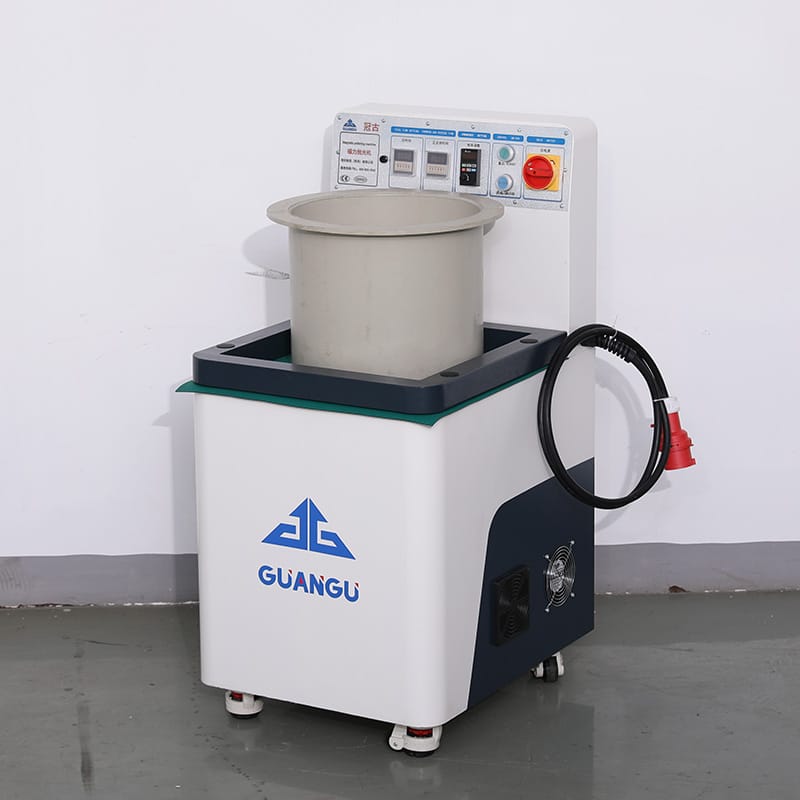
PP (polypropylene) or stainless steel? Every magnetic polishing machine user faces this choice. Both have clear pros and cons. The best pick depends on what matters most to you.
Heat — Steel conducts heat fast. The polishing water heats up quicker. You need to change water every hour. PP buckets heat up slower. Water changes drop to every 1.5–2 hours. Fewer stops means more output.
Toughness — Steel buckets are welded as one piece. Pin friction barely affects them. They last almost forever. PP buckets are lighter and cheaper. But they wear down from friction, heat, and UV over time. For busy shops, steel saves money in the long run.
Noise — Steel pins hitting a steel bucket are loud. PP buckets are much quieter. If your shop has noise rules or workers stand close to the machine, PP may be the better choice.
Magnetic Field Strength — This is the factor most buyers miss. Steel walls are 2–3 mm thick. PP walls are 5–6 mm thick. Thinner walls mean the parts sit closer to the magnets. Closer means stronger polishing. Steel buckets give noticeably better results for fine finishing.
Our Advice — Want the best polish and longest life? Pick steel. Need a quieter or cheaper option? PP works well. Many shops keep both and switch based on the job.
Need Expert Advice on Metal Finishing?
Our team can recommend the right polishing solution for your specific application.
Get a Free Consultation