
Translation vs Rotation: Movement Modes
Square buckets or round buckets? Translation or pure rotation? Choosing the right movement mode is key to optimising your polishing results.
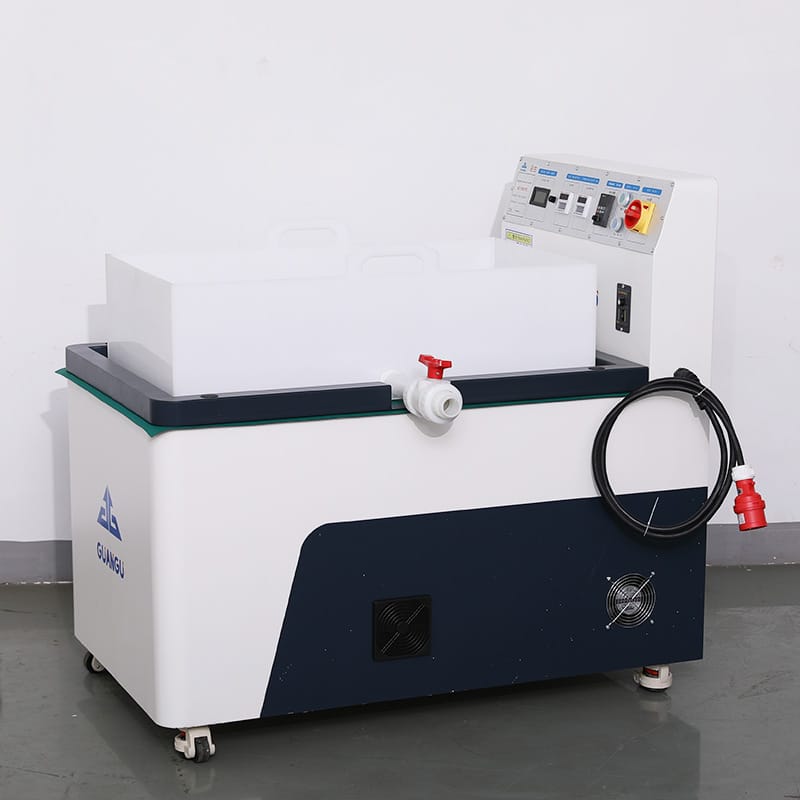
First-time buyers often ask: what is the difference between translational movement and rotation? The answer affects your finish quality. Here is what you need to know.
Translational Movement — The pins sweep back and forth across a square bucket in a linear pattern. This gives broad, even coverage. It works best for larger parts (up to 800 × 400 mm in the GG8850). The pins travel the full bucket length while also spinning.
Rotational Movement — The pins spin around a central point without sweeping. This creates a focused vortex. It works best for small parts in a round bucket. The tighter motion gives a more intensive local polish.
How to Choose — Use translational mode with a square bucket for large, flat, or long parts. Use rotational mode with a round bucket for small parts like watch pieces or jewellery findings. Some operators use both modes in the same cycle for the best results.
Why Both Buckets Matter — Guangu Tech machines come with both square and round buckets. Match the bucket shape and movement mode to your part type. This ensures the magnetic field reaches every surface. No dead zones. Maximum finish quality.
Need Expert Advice on Metal Finishing?
Our team can recommend the right polishing solution for your specific application.
Get a Free Consultation